Olavur Davidsen: barbering at 14, a business at 20, global in 24 hours
He couldn't read the paperwork his own business generated — severe dyslexia saw to that — so he built a barbershop the Faroe Islands had never seen anyway. Five days after meeting JJ, and less than one working day after joining The Global Stylist Blueprint, Olavur Davidsen took his first international distribution meeting. This is episode three of Global Stylist Stories.
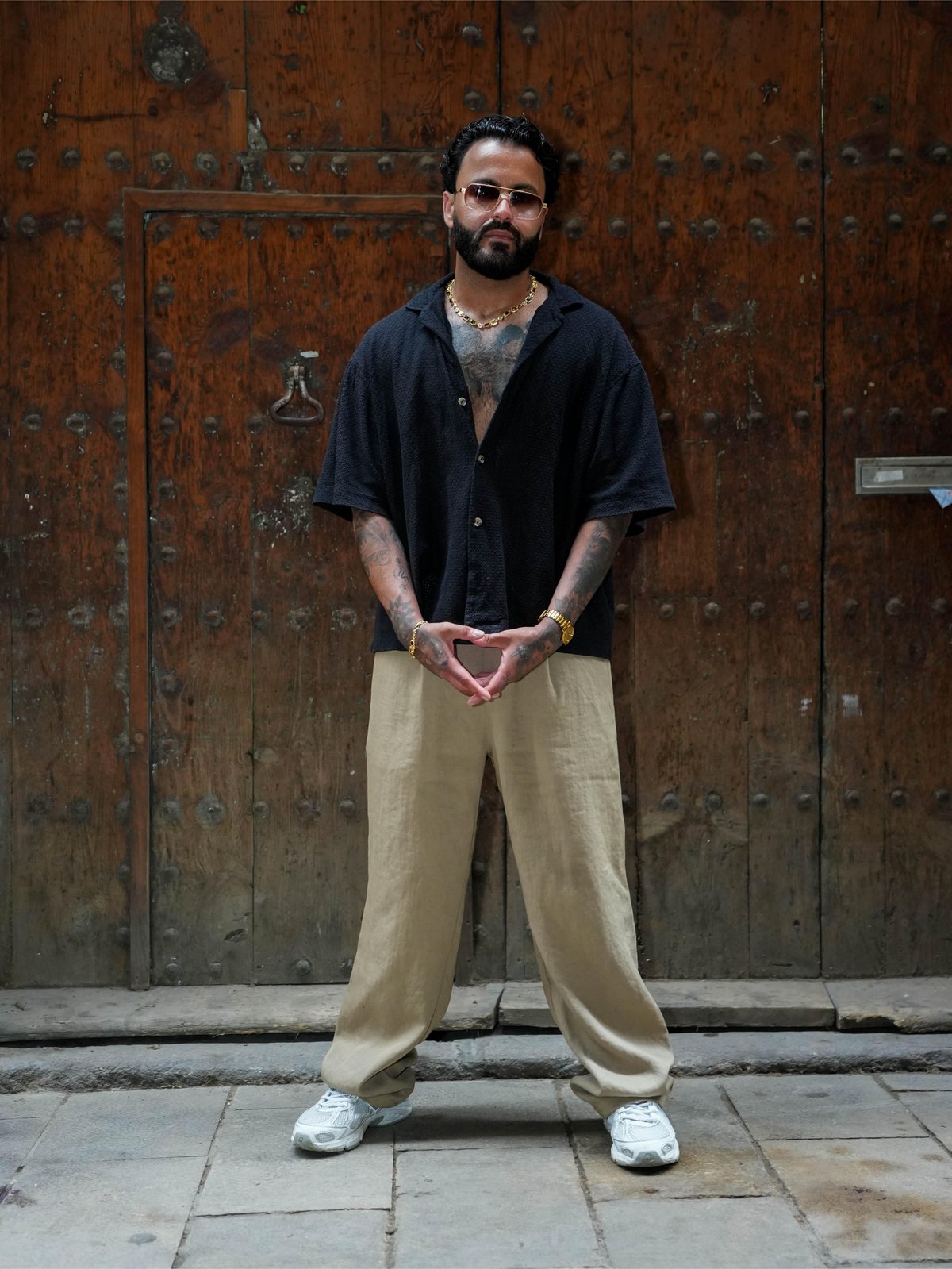
Episode three of Global Stylist Stories, filmed days after JJ and Olavur first met. Lightly edited for readability from the spoken original; names corrected. Financial figures are withheld deliberately, as they were in the film.
JJ: We're back for episode three of Global Stylist Stories, and today we have something special — genuinely unheard of. In this industry most people take years to figure things out. For some people, it starts with one conversation. Today I'm sitting with Olavur. He's from the Faroe Islands, he started barbering at fourteen, built a business by twenty — and within days of meeting, honestly within hours, he's already stepping onto the global map. Olavur — introduce yourself.
Olavur: I'm Olavur, I'm twenty years old, from the Faroe Islands. I've been a barber since I was fourteen. But the entrepreneur part was always there. I wasn't good at school in any way — I'm very dyslexic, so I can't read well — but I always dreamt of building some kind of business. At fourteen I started cutting, just for fun. At sixteen there was a school entrepreneurship competition, for all the schools in my country — me and four friends won it, then went on to Denmark and took third place there. From that point I was obsessed with starting a company. I knew I loved barbering. Two years later it clicked: I could do this for a living.
JJ: The entrepreneurial seed was there from the beginning, and then it met the passion for hair. So — the Faroe Islands. What's it like building something there?
Olavur: It's very close-knit. Everyone knows each other. Around fifty thousand people. The unemployment rate is near zero — we need people, workers come in from outside. The biggest trade is offshore, fishing. But tourism is growing a lot.
JJ: A lot of people underestimate how much an environment shapes opportunity. There are two mindsets: "it's not worth doing business in the Faroes, it's too small" — or "it's such an untapped market that if you get things right, you can succeed very fast." And that's exactly what shaped your barbershop. You've had the shop itself about five months — before that, half your bedroom was a shop. I won't go into figures, but I know what he's turning over monthly, and I'm happy to say this much publicly: I don't see many shops with three or four barbers in them turning that over — let alone one man doing it inside six months.
JJ: So — fourteen. What actually got you into barbering that early?
Olavur: I'd started growing a bit of beard — not much — and I asked my brother for a shaver, just to clean up. He bought me a hair clipper instead. Instead of being annoyed that I got the wrong thing, I took the opportunity: I started cutting his hair, he started cutting mine. We were both bald for about the first five months. [laughs]
JJ: So technically we should have your brother on here — his mistake is the reason you're successful. But seriously: at fourteen, most people have no idea what they want. I didn't know at seventeen or eighteen. And there aren't many people running a genuinely successful business at thirty, let alone twenty.
JJ: Starting that young, there must have been struggles. Did you ever doubt yourself?
Olavur: When I was in school it was a lot. School until two o'clock, then a job after school, then cutting after the job — until eleven, twelve at night. That was until I was seventeen, when I stopped the job and went full-time barbering after school. And then the dyslexia. I'm quite strongly dyslexic, so reading and writing put up barriers — in business especially. But for me it became a strength: instead of focusing on the studies, I was always focused on how I could make it without reading and writing. The school stuff was just papers to me.
JJ: Was there ever a moment — with the invoices, the registrations, the paperwork a business floods you with — where the dyslexia made you doubt it? Or did you have support?
Olavur: My mum was very supportive. She was a stay-at-home mum, and when she saw I was struggling with reading and writing, she took time to help me. I didn't get the official dyslexia papers until ninth grade, so all the school years before that were just finding ways to cope. And now — the phone and the computer are so smart. Everything can read for you; you can dictate everything. It's not a big barrier any more. I've actually been back into my old school giving presentations to students — telling them: even though you're dyslexic, this is what you can do. Of course you can make it without reading.
JJ: That's the part people don't see. They see the success of Ollis Barbershop — they don't see the external pressures behind the journey. There will be people who assume you only succeeded because someone handed you money. The reality is: you were studying, working a job until seventeen, cutting hair at night, with your mum supporting you through the dyslexia. That mindset — refusing to accept no — is why this has worked in six months.
JJ: So what makes Ollis Barbershop different from everything else on the Faroe Islands?
Olavur: Consultations. I talk to my clients a lot — I ask a lot of questions before I ever do the cut. And because I ask so many questions, I always give them what they want. It's almost never that someone leaves saying "you gave me what I didn't ask for" — because I asked.
JJ: I teach exactly this: the moment you rush or ruin a consultation, put your scissors down — you've lost them. And the branding too. When I first met you I looked at what was out there in the Faroes — there's not much online at all. Then I see your content. I called you at ten at night just to ask who edits your videos. The production value, the way it's branded — you had that vision early. It's not just about cutting hair. Where do you see it going?
Olavur: More barbershops — maybe two in the Faroes, and maybe outside the country: Iceland, Denmark… the dream would be London. And education — helping the younger guys build a strong foundation, good-quality haircuts, and good branding for themselves. And later, a dream from when I was younger: clothing. There are a few clothing stores in the Faroes, but they're mostly run by older people. Something modern — a bit old-school. Old-money looking.
JJ: That's the bigger vision people miss. You're not just a barber — you're the brand you're building: the shops, distribution, education, clothing.
JJ: Now the part I want on record. Today is Wednesday. We met on the Friday five days ago — for less than four hours, in a session I was teaching. What stood out in those four hours that made you want to talk?
Olavur: I hadn't heard of you before I saw you. Then you talked about the fashion shows you'd done, the two barbershops, the tattoo studio — and I thought: okay, he probably knows how to do distribution.
JJ: And I came straight up to you and asked: why are you here? What do you actually want? I could tell from the way you held your clippers. We just started chatting. Sometimes it's not about time — it's about alignment. That same night, you booked a call with me. I finished teaching at half five, got home, had dinner, and you were my first call at eight. It ran nearly two hours. And by the end of it you'd joined The Global Stylist Blueprint. Be honest — if you told someone "I met a guy for four hours, had one call, and invested three to six months with him," they'd think you were mad. What happened in your mind?
Olavur: I saw straight away there were opportunities. In my country, no one has done what you've done — maybe one or two hairstylists have come near it. And I thought: I don't want to be the third one. I want to be the first one to do more — the shows, the stages, maybe trophies, being on main stages, judging.
JJ: And on that call — honestly — there must have been doubt. Is this guy just talking? Can he deliver?
Olavur: Yes. Between the session and the call I Googled you, of course. And I saw: top five UK barbers in '23 and '24, top hundred in the world. Straight away I knew — okay, this guy is real. He's not a forex scammer. [laughs]
JJ: But still — you got into bed that night. There must have been a part of you lying there thinking: can he actually deliver? Have I just thrown my money away? I'd have thought the same: he's a great salesperson, but can he deliver?
JJ: So here's the timeline. Friday, ten p.m., we got off the call. Saturday I was on a stag do — still WhatsApping you bits of information. Sunday, a quick catch-up. Monday — under one working day later — seven p.m.: you're taking your first international distribution meeting.
Olavur: It was a bit unreal. I'd written to companies and brands before, and they don't answer — or they don't see me as a serious buyer, because I'm twenty years old. And now I'm talking to a real distributor, getting deals moving. Unreal.
JJ: And what people should know: before that meeting we had two or three calls and messages prepping you — how to structure it, your vision, what you want — gently moulding it so that a distributor takes a twenty-year-old seriously. And in the meeting itself? I barely spoke. I was on loudspeaker, driving. You led it. If you'd placed an order there and then, it would have shipped. But with the right direction, we did it the way that carries the least risk: build the inventory first, talk to the distributor about what sells and what doesn't, adjust, negotiate the rates — and then the first shipment goes out. Possibly by the end of the month, your goods are there.
JJ: Before we finish — we'll record this again in five months. Give me three things you want to have achieved by then, on the record.
Olavur: One — becoming the main wholesaler in the Faroe Islands for hair products, trimmers, everything barber. Two — turnover up around thirty-five per cent. Three — being known outside the Faroes. Being the first person from the islands on an international stage.
JJ: It's out there now, in public, for people to see. And I want a minimum of fifty per cent, not thirty-five — because I know you can do it, and I'm here to push you. People genuinely think success takes years. We've just shown what happens in under twenty-four hours with the right guidance: from starting at fourteen, to building a business at twenty, to stepping onto a global stage with your distribution already moving. Work ethic, vision, and direction from inside the industry. This is only the beginning. Any final message?
Olavur: I don't think so. [smiles]
JJ: Keep your cards close to your chest. Let the results do the talking. Olavur — absolute pleasure. Time to put the Faroe Islands on the map.
Since filming
The plan on record above happened faster than either of them put on camera: with JJ's direction, Olavur secured master distributor rights as the sole supplier of hair and beauty products for the Faroe Islands and surrounding territories — at twenty, within his first month in the mentorship, after more than a year of solo outreach had gone unanswered. His full case study is here.
Find out which stage is holding you back
The Global Stylist Scorecard scores you across the eight stages of the GSB Ascension Method and names the one costing you bookings. Twelve minutes. No email, nothing to buy.
Take the Scorecard