Men's editorial hair training: what it involves and where to get it
Men's editorial hair training teaches you to build looks for camera rather than for clients: working to a brief, grooming for lighting, texture that reads in print, and holding a look across an eight-hour shoot. Salon excellence does not transfer automatically — the client, the standard and the pressure are all different. In the UK you can learn it through short craft courses, academies, or mentorships that put you on real shoots.
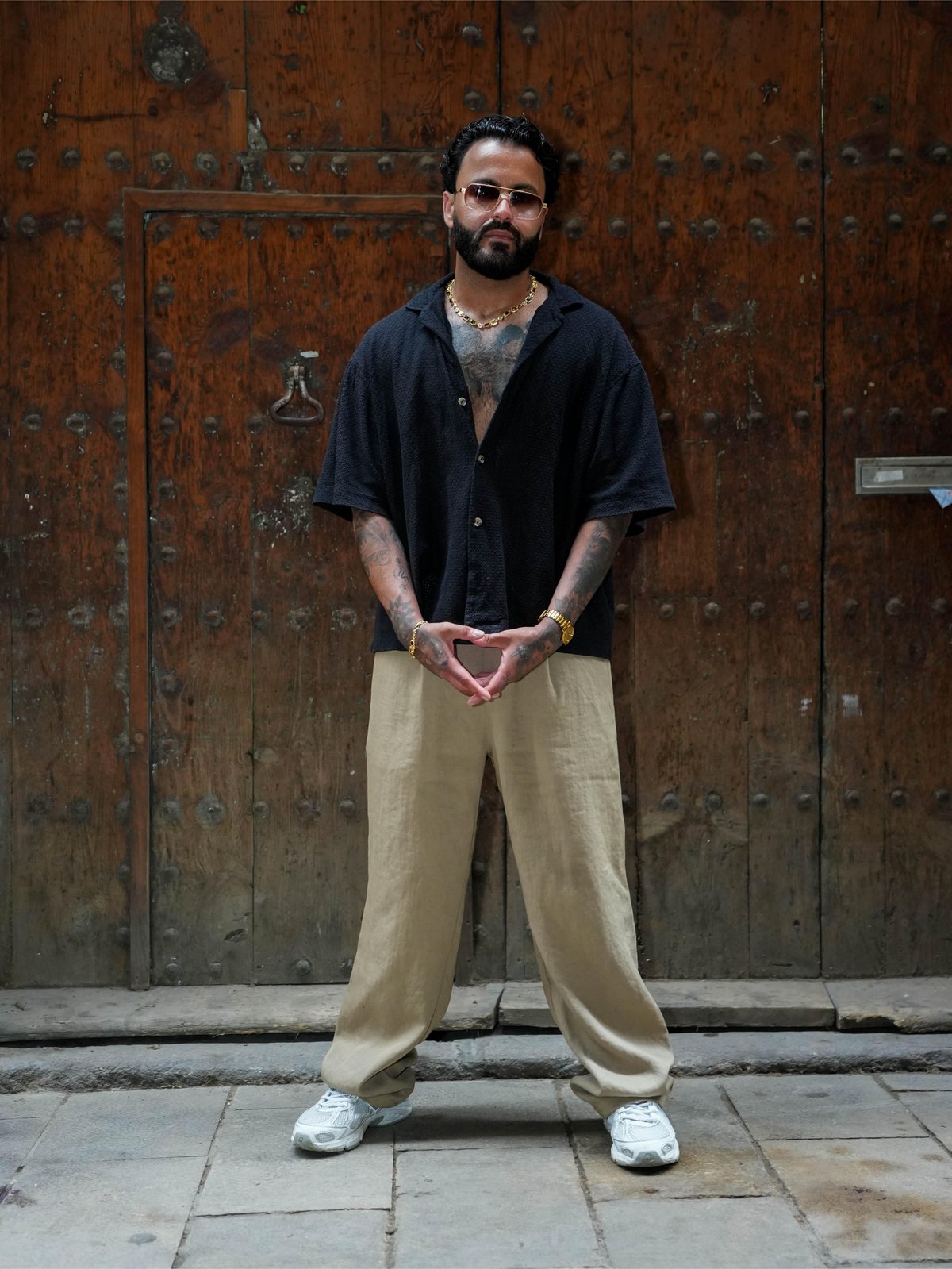
What "editorial" asks of men's hair
Editorial grooming is executed restraint. The look serves a photograph, a garment or a story — almost never the model's preference — and it has to read correctly through a lens, under lights, in the crop the art director has planned. Texture that looks perfect in a mirror can read as grease or noise on camera. A fade that wins competitions can be entirely wrong for the brief.
The skills that transfer from the chair: cutting, product knowledge, speed. The skills that do not: reading a brief, working without a basin or mirror, matching a reference exactly rather than improving on it, and keeping fifteen models consistent while the schedule collapses.
What proper training covers
- Brief interpretation — turning a mood board into a repeatable look.
- Grooming for camera — sheen control, flyaways, how texture photographs at different focal lengths and light temperatures.
- Set craft — kit discipline, working around make-up and wardrobe, refreshing between shots, continuity.
- Backstage speed — the same look, many heads, no time.
- The politics — who outranks whom on set, when to speak, when to simply execute.
The UK routes
Short craft courses. TONI&GUY's Session & Editorial and Kevin Fortune's academy compress the craft into days, and Fortune's ends with a real portfolio shoot. Fast, credible, finite.
Technical academies. MENSPIRE builds the underlying men's-hair skill to an elite standard — the prerequisite rather than the editorial training itself.
Assisting. The unofficial school. Unpaid or modest, and irreplaceable: nobody develops set judgement from a classroom.
Mentorship on real work. The Global Stylist Blueprint — my programme, declared bias — teaches editorial through doing it: mood boards, test shoots, a submitted fashion editorial, entry to in-person events worldwide included, and at least one international opportunity per mentorship as milestones are passed. Students have gone from this into London and Dubai Fashion Week work and published editorials.
How to choose
Courses teach you what editorial looks like. Assisting and mentorship teach you what it feels like at hour seven. You need both kinds of knowledge, and only one of them is available in a classroom.
If your technique is unproven, fix that first. If it is proven and unbooked, stop buying craft courses — your gap is access and positioning, and more technique will not close it.
Find out which stage is holding you back
The Global Stylist Scorecard scores you across the eight stages of the GSB Ascension Method and names the one costing you bookings. Twelve minutes. No email, nothing to buy.
Take the Scorecard