What actually happens when you join
From the free audit to the final month: the discovery call, how your three targets get agreed and written down, what the participation requirements are and why they exist, and exactly what was done for three named students — including which outcomes came through my network and which they generated themselves.
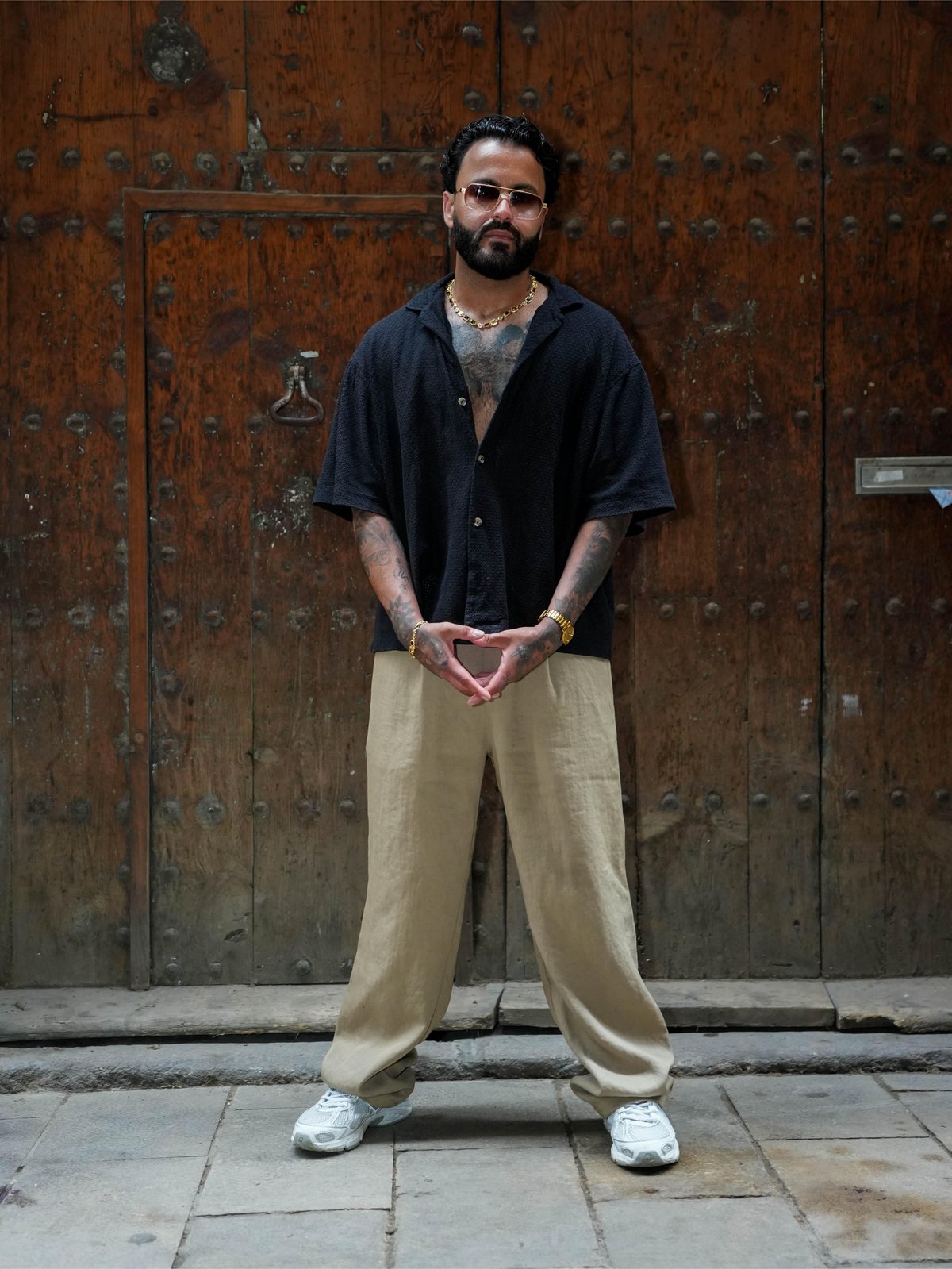
Which programme this page describes: the one-to-one Mentorship, the premium tier at £4,500. Our main programme, The Collective, works differently: it is a monthly membership (£500 for the first month, then a rolling £249 a month), self-driven, with a short onboarding call, no written outcome agreement and no agreed outcomes.
This page exists because a prospective student recently ran our programme past an AI assistant to check whether it was legitimate, and the assistant produced a fifteen-point list of things it said should be verified before paying. They were good questions. Here are the answers, publicly, before anyone has to ask.
A note on names first. People arrive here searching for very different things — beauty career coaching, a session styling masterclass, fashion week education, barber business mentorship. They are mostly describing the same gap in different words: the craft is not the problem, and the people who book work do not know you exist. What follows is what actually happens if you decide to close that gap with us.
Step one: the audit, before you speak to anyone
Everything starts with the Global Stylist Scorecard. Twenty-four questions, free, no email gate, nothing to buy. It scores you across the eight stages of the GSB Ascension Method and names the single stage that is actually costing you bookings.
Take it before you contact us. Two reasons. First, it means the discovery call starts from evidence rather than from a conversation about what you think the problem is. Second, it quite often tells someone the answer is not this programme — if the score says the gap is technical, no amount of positioning work will fix that, and we would rather you found that out for free.
Step two: the discovery call
An hour, one to one, with me. Not a salesperson, not a closer.
What happens on it:
- I go through your actual work — portfolio, feed, current client base, how you are presenting yourself.
- I name where the gap is. Sometimes that is uncomfortable.
- I build a roadmap specific to you.
- That roadmap ends in three specific outcomes we agree together.
Applications are declined at this stage more often than people expect. If the technical foundation is not already professional, this is the wrong product and I will say so, usually with a suggestion of where to go instead. That screening is the reason the student numbers are small — and a large part of the reason the outcome record is what it is.
Step three: the three targets, and why they are yours rather than ours
There is no fixed curriculum outcome that every student is pushed toward. The three targets are set individually, because a session stylist in the Faroe Islands and a franchise owner in Northamptonshire do not need the same three things.
They generally fall across three areas:
- An international stage or Fashion Week opportunity — a named, dated, checkable appearance.
- An editorial or portfolio outcome — work that opens doors rather than fills a feed.
- A brand or educator positioning outcome — being recognised for something specific by people who book.
What each one means for you is written down before you start. A target that cannot be measured cannot be met, and a vague promise protects the person making it, not the person paying for it.
Step four: what is in the written agreement
You receive the agreement before you pay anything. It sets out, in writing:
- The three agreed outcomes, defined specifically rather than generically.
- The participation requirements — at least 90% attendance at the weekly one-to-ones, and at least 90% completion of the work set between them.
- What happens if the outcomes are not secured within the initial term despite those requirements being met — the extension, and the refund position at month six.
- What happens if an external event forming part of a target is cancelled by the organiser: a replacement opportunity is provided rather than the target being written off.
- The terms and conditions attaching to all of the above.
The outcome commitment, in full
The three outcomes are tailored to each student. In practice most people choose some version of these three:
- An international show opportunity as an educator — a named, dated stage.
- A brand partnership.
- Entry into Fashion Week or backstage editorial work.
What the agreement then commits to is this, and the conditions are not small print — they are half the deal:
If you attend at least 90% of the calls and complete at least 90% of the work set between them, those three agreed outcomes are guaranteed — secured within the agreed window.
If they have not been secured by the end of month three — 120 days — the mentorship is extended by a further three months at no additional cost.
If they still have not been secured by month six, with those participation thresholds met throughout, a refund is issued.
The record so far
All six students who have met the 90% thresholds have secured all three of their agreed outcomes within 120 days. Not one has needed the extension, and no refund has been issued.
Two things worth saying about that, because a claim like it is worth nothing without them.
First, it is conditional and the condition is the whole story. It is not a claim that everyone who enrols succeeds. It is a claim about the people who turned up to 90% of the calls and did 90% of the work. Not everyone does, and those who do not are not in that number.
Second, the evidence is held. Every outcome behind that statement is documented — the student, the three outcomes as written in their agreement, and the date each was secured. Six is a small number, and it is small deliberately. I screen and audit every applicant myself. If I cannot help you, or your craft is not yet where the work demands, I do not sign you up — and I would rather have that conversation on the discovery call than take your money and hope.
That does mean the record is partly a function of who I let in, and I am not going to pretend otherwise. It is the honest reading. What it tells you is that where I judged I could help and the person did the work, it worked every time.
Three of the six are named on this site with their Instagram handles, and you can contact them directly without going through me.
What the agreement does not cover
The commitment is to securing the opportunity, not to the world cooperating afterwards. The agreement addresses circumstances genuinely outside anyone's control — an event cancelled by its organiser, illness, visa refusals and travel logistics.
That is not a get-out clause and it is worth understanding why. If an organiser cancels a show, a replacement opportunity is provided rather than the target being written off. But if a slot is won and a visa does not arrive in time, the slot was still won, and no mentor on earth can make an embassy move faster. Measuring on "secured" rather than "attended" is what keeps the promise honest in both directions.
Read the two halves of that together, because they only work as a pair. I am committing to specific outcomes; you are committing to turning up and doing the work. If you meet your side and I do not meet mine, there is a defined remedy and it is written down rather than negotiated afterwards when tempers are involved.
And if you cannot realistically hit 90% attendance and 90% of the work over three months — because of the shop, the family, the season — say so at the discovery call. It is a much better conversation to have before payment than at month four.
The fifteen things to check before you sign — ours or anyone's
A prospective student recently ran our programme past an AI assistant, which produced a list of contractual points it said should be verified before payment. It was a good list. Rather than wait to be asked, here it is — and the instruction that goes with it is simply: ask for the agreement, and get a written answer on every one of these before you pay a penny.
- How is each of the three outcomes defined, specifically? What exactly counts as secured — booked and confirmed, or delivered?
- What qualifies as an "international opportunity" for the purposes of the agreement?
- How is the 90% attendance figure calculated — out of how many scheduled sessions?
- How is the 90% work completion measured, and what evidence establishes it?
- What happens if the mentor cancels or reschedules a session? Does it count against you?
- What is the exact length of the initial term, and the exact date it ends?
- What is the remedy if the outcomes are not secured despite you meeting your side?
- If a remedy period applies, when precisely does it start and end?
- What happens if two of the three outcomes are met but not the third?
- What happens if an event or show forming part of an outcome is cancelled externally?
- What are the cancellation terms if you need to stop partway through?
- What happens if illness or a personal emergency interrupts the term?
- Who owns the portfolio and editorial work produced during the mentorship?
- What are the confidentiality terms, in both directions?
- What is not included — stated explicitly rather than merely absent?
If any answer you get is vague, that is the answer. A programme confident in its terms will put them in writing without hesitation. If a definition in the document is looser than what was described on the call, raise it before signing rather than after — and that applies to this agreement and every other one you will ever be handed.
We would rather lose a sale to someone who read the contract carefully than gain one from someone who did not.
Step five: why the 90% exists
It is not there to create an escape hatch. It is there because the method does not work without the work.
The calls set direction; the movement happens between them. A student who attends every call and does nothing in between will not hit their targets, and no mentor on earth can make them. So the commitment runs both ways: I commit to the outcomes, you commit to turning up and doing the work, and both halves are written down.
It also protects you. It means the standard is a documented threshold rather than my opinion of whether you tried hard enough.
Step six: what a normal week actually looks like
- One to one with me, every week. The agreement commits to a minimum of one hour; in practice students currently get two hours or more a week. Not a group call, not a rotating faculty, not a recorded module.
- 24/7 direct access in between. WhatsApp and email. When a brand replies to a stylist at 9pm and they do not know how to answer, waiting five days for the next group call is how opportunities die.
- The GSB Portal. Every student gets access: your three agreed targets and progress against them, your attendance record, call booking, the events calendar, the full library of recorded lectures — every session is recorded — all GSB materials, and a community section where students and I share wins, ask questions and build up the FAQs between us.
- Work set between calls. Positioning, portfolio, outreach, specific to your roadmap.
- Entry to my in-person events worldwide, included in the fee. They run at least monthly — Malta, Barcelona, Paris, Cyprus, Dubai and India so far.
- Hands-on assisting as you progress — backstage styling on real Fashion Week sets alongside me and other team members, across Dubai, New York, London and Paris. That is where you learn what no masterclass teaches: the speed of an international fashion event, working to a designer’s brief, and how a backstage team actually runs. Milestone-unlocked, because I am not putting someone in that room before they are ready. It is my name in there too.
What that has actually produced — with honest attribution
Prospects ring my students and ask a version of the same question: did JJ make that happen, or did you? So here is the answer in advance, split by outcome rather than by student.
Tom Darling — Darlin's Barbers, UK
Where he started: award-winning franchise owner, three stores, a decade behind the chair, and no route to being known beyond his own postcode.
What happened: he raised Sergio Tacchini in one of our weekly one-to-ones — a brand he had worn for years. We targeted them deliberately using the method: positioning, portfolio, the specific way a heritage fashion house reads a stylist. He sent eight unedited images from a 190-shot collection. They approached him, by Instagram DM, within two weeks of him starting.
My part, precisely: I coached that message into a business proposal and a first meeting, and I sat in on that first call only. He has run the relationship himself ever since, with me copied in. That distinction is the most important one on this page, because it is the answer to what happens when the mentorship ends.
Also in that term, and these came from my network: the three-day Apparel Group Dubai wedding at Fairmont Windsor Park, and demonstrating on The Platform at Professional Beauty India. Both were rooms I was already in, and I put him forward. The exclusive Manchester shoot for DJ Monka came to him directly. His reach went from 74.4k to a consistent 390k monthly — his figures, not ours. He has since re-signed. Full case study · filmed interview and transcript
Olavur Davidsen — Ollis Barbershop, Faroe Islands
Where he started: twenty years old, in a territory of roughly 54,000 people, having spent over a year cold-approaching distributors without a single reply.
What happened: master distribution rights for the Faroe Islands and surrounding territories, secured within his first week of applying Step 04, Network Engineering. He is now the leading supplier of hair and barbering tools across the region.
My part, precisely: this one came through my network. My European brand contacts, introductions I made directly. I will not pretend otherwise, and it is the clearest single illustration of what the fee actually buys. Olavur runs the relationship day to day himself now.
Also: selected as the first Faroese hairstylist to demonstrate and educate on the MainStage at Professional Beauty India, Delhi. Full case study
Brendon Rice — B&S Hair & Beauty Studio, Malta
Where he started: technically excellent, twenty years in, in a market of under 600,000 people, with roughly 3,000 organic reach.
What happened: reach to 200,000, an exclusive Malta brand ambassadorship with Goldie, and becoming the first Maltese hairstylist to demonstrate and educate on the Platform Stage at Professional Beauty India. Full case study
How the network access actually works
This is the part worth being precise about, because it is the single biggest thing you are paying for and the easiest thing for a programme to be vague about.
Every international stage those three students appeared on came through my network. So did the Windsor wedding. Those were rooms I was already in, and I put them forward.
But putting someone forward is a decision, not an entitlement. Here is the honest mechanic:
- You get direct access to my network. Real introductions, real rooms, real events — not a lesson about networking.
- I decide who goes forward, and when. Not on a schedule, and not because a term is ending.
- That decision is made on whether you are at the level and the milestone for that specific room.
The reason is simple and I would rather say it plainly than dress it up: it is my name on the recommendation, and I am usually still in the room. If I put someone on a stage or onto a set before they can hold it, I have damaged their reputation, mine, and the relationship with the organiser who trusted me. That relationship took years and it is the whole asset.
So the milestone gate is not a get-out. It protects you as much as it protects me — nobody's first international appearance should be one they were not ready for, because in this industry you get one impression per room.
What this means practically: the work between calls is not busywork. It is the thing that moves you to the point where I can put your name forward with confidence. That is why the participation threshold exists, and it is why the two halves are written down together.
Why the same-week comparison matters
Three students, three countries, three different starting points, June 2026 — all demonstrating at the same international event. That is not three anecdotes; it is the same process producing the same category of outcome across wildly different markets.
Olavur is the cleanest single test: same person, same market, same target brands. Over a year of silence alone. A signed distribution agreement within a week of changing the approach.
What we do not do
Four things, stated plainly, because you will find them out anyway:
- The mentorship itself does not teach you to cut. If your technique is not already professional, your application will be declined — the one-to-one work is career mechanics, not fundamentals. The in-person events are a different matter. Entry to every in-person GSB event worldwide is included in the mentorship fee — Malta, Cyprus, India and wherever we run next — and those events are where the advanced technical work happens: advanced cutting, clipper work, sectioning for movement and shape, and session and editorial finishing, taught hands-on on live models. So the honest line is this: we will not take you from beginner to competent, but if you are already professional we will absolutely sharpen the craft alongside the positioning — what we actually teach at the in-person events.
- We are not a large peer community. There is a community section in the portal where students and I share wins, ask questions and build the FAQs together — but it is small by design, because the intake is. If a large, busy peer network is what you want, a membership platform will serve you better on that specific count — see our comparison with MENSPIRE and Mentored By Menspire, which names where they are genuinely stronger.
- We do not close your deals. As Tom put it in his own public review: "He can get you in the door. You have to close it." He is right, and I would not change it. A mentorship that closes your deals produces a stylist who cannot close deals.
- We are not a big operation. I am the product. That is the strength and it is also a concentration risk, and it is why places are limited.
The questions people are too polite to ask
These are the real objections. If any of the answers put you off, that is the answer working.
£4,500 is a lot of money. Is it actually worth it?
It is a lot of money, and I will not pretend otherwise. There is a full breakdown of what every price point in this industry actually buys, including where a cheaper option is the better choice and how our own two tiers differ. Whether it is worth it depends entirely on what a single international booking, brand partnership or stage appearance is worth to your career — and on whether you will do the work. For a barber whose column is already full, the honest maths is that the ceiling you are hitting costs you more every year than the fee does once. For someone who wants to be told what to do and not do it, it is the most expensive nothing you will ever buy.
What if I do everything and still do not get the results?
That is exactly why the participation thresholds and the extension terms are written into the agreement rather than promised on a call. If you have met your side and the outcomes have not been reached in the initial term, the mentorship extends at no additional cost. The specific terms are in the written agreement, which you get before you pay. Read every definition in it, and query anything that is not precise.
Is this not just a course I could get free on YouTube?
The information is free. It has been for years. What is not on YouTube is someone deciding to put your name forward to an organiser they have a ten-year relationship with. This is not an information product; if it were, it would cost £200 and you would not finish it.
I have done courses before and nothing changed. Why is this different?
Because most courses end at the classroom door. You leave with knowledge and no change in who knows you exist. The measurable difference here is the three named outcomes agreed in advance and the weekly accountability — and if you are honest with yourself, "nothing changed" after a previous course usually means nothing was executed after it either. That part is still on you.
Am I too old, or too late?
Brendon Rice had twenty years in the industry when he started. Olavur Davidsen was twenty. Neither age was the variable.
I am not good enough yet. Should I wait?
Possibly, and I will tell you if so. If the technical foundation is not there, your application will be declined — not to be precious, but because positioning excellent work is a different job from making work excellent. Take the free Scorecard first; it will tell you which of those two problems you actually have.
I am not in London. Does that matter?
No, and the evidence is the point of the whole thing. Wellingborough, Malta, the Faroe Islands. Population 54,000 in Olavur's case. Geography stopped being the constraint when portfolios stopped living in print.
I do not have a big following. Do I need one first?
No. Brendon started at roughly 3,000 organic reach. Followers are an output of positioning, not a prerequisite for it — and the brands worth working with count considerably more than your follower number.
How do I know this is not a scam?
You should not take my word for it, and I would be wary of anyone who asked you to. Three students are named on this site with their Instagram handles. Message them directly — I am not copied in and they are not briefed. Their reviews are on Trustpilot in full, including the criticism. The international appearances are listed publicly by the event organisers themselves. Everything, including what we have not proven, is on the evidence page.
What if you are too busy for me?
It is a fair question and it is why places are limited and admission is by application. One hour, one to one, every week, plus direct access in between. If I took everyone who applied, that promise would be worthless — which is the actual reason for the gate, not artificial scarcity.
What happens when the mentorship ends? Do I lose everything?
This is the question I would ask, and the answer is in Tom's case. He targeted Sergio Tacchini himself using the method, the brand approached him, and he has run that relationship directly ever since with me merely copied in. If a programme cannot answer this question with a name, be careful. A network you are renting is not the same as a capability you have built.
I only want brand work — will I be pushed toward teaching?
No. The three targets are set individually at the discovery call. If stage work is not what you want, it does not become one of your three.
What if I cannot commit to the work?
Then do not do this yet. That is not a sales technique — a student who cannot meet the participation threshold will not hit their targets, and both of us will have wasted three months. The threshold exists precisely so that this conversation happens before payment rather than after.
Before you pay anyone — including us
Ask these of any mentorship you are considering:
- What exactly does each promised outcome mean, defined specifically?
- How is any participation requirement calculated, and what evidence establishes it?
- What happens if the mentor cancels or reschedules a session?
- What happens if some but not all of the outcomes are achieved?
- What are the exact dates and deadlines?
- How much direct access do you get, and to whom?
- Are there real introductions, or only teaching about networking?
- Can you name three people you have taken from where I am to where I want to be?
That last one is the best question on the list. Ours are Tom Darling, Brendon Rice and Olavur Davidsen — named, contactable on Instagram without going through me, with reviews published in full including the criticism. Everything else is on the evidence page, including what we have not yet proven.
Start with the audit
The Global Stylist Scorecard scores you across the eight stages and names the one holding you back. Twelve minutes, free, no email gate — and it may well tell you this is the wrong product for you right now.
Take the Scorecard